
When most people think about an eye exam, they think: Can I see the letters on the chart?
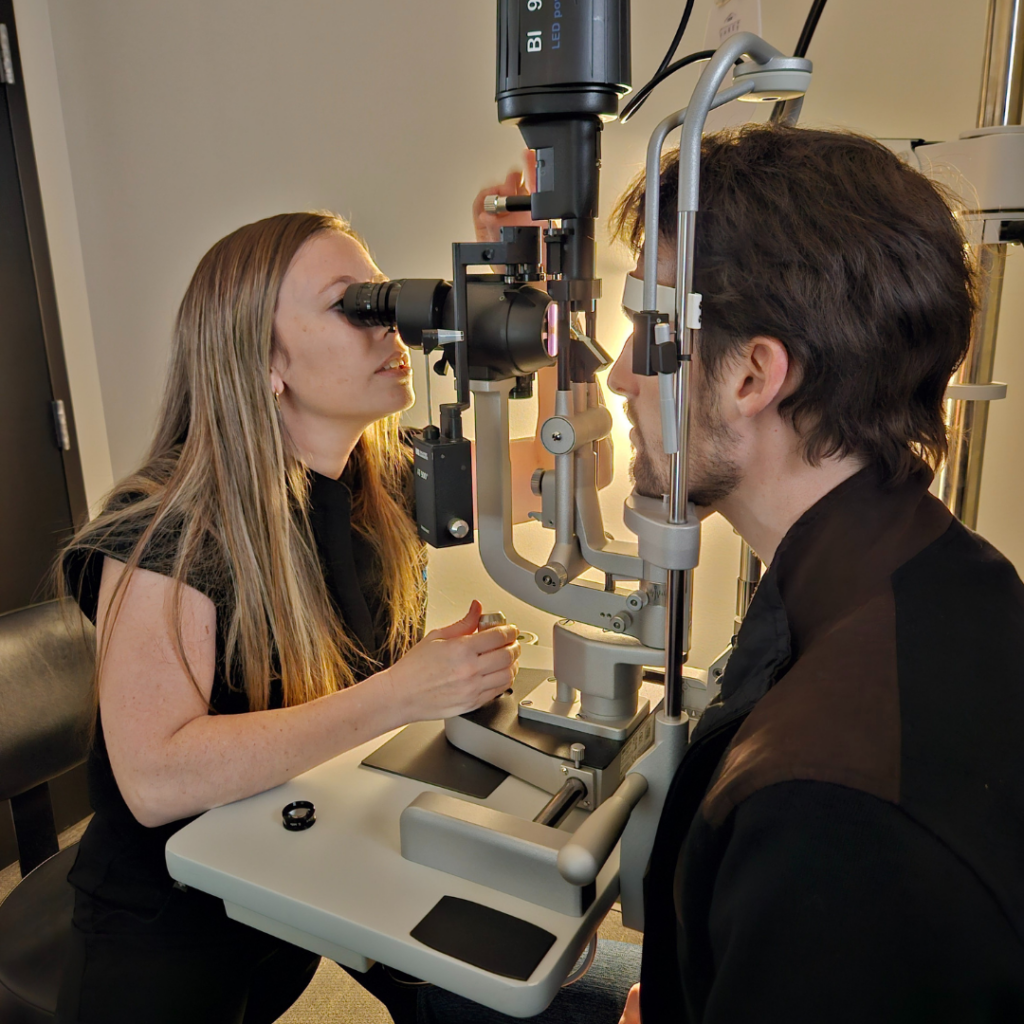
But a comprehensive eye exam is doing far more behind the scenes.
At McFarland Eye Care, eye exams are tailored based on your age, lifestyle, risk factors, and overall eye health. What we look for in a toddler’s exam is completely different from what we focus on during a patient’s 60s and beyond.
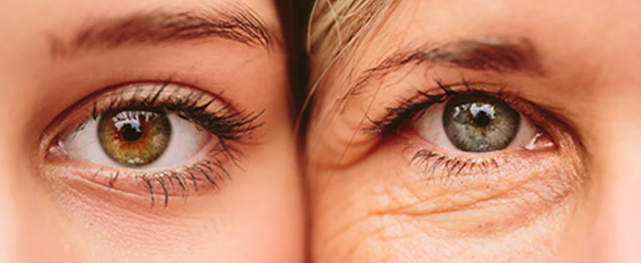
Your eyes change over time. Your exams should too.
Why Do Eye Exams Change Based on Age?
Your eyes develop, mature, strain, and age just like the rest of your body. Different stages of life come with different visual demands and different risks.
A child learning to read needs healthy eye teaming and focusing skills.
A college student spending 10 hours on screens may struggle with digital eye strain.
A patient in their 60s may need monitoring for cataracts, glaucoma, or macular degeneration.
That’s why routine eye exams are never “one size fits all.”
How Often Should You Get an Eye Exam?
For most patients, a yearly eye exam is recommended regardless of age.
Annual eye exams help monitor changes in vision, catch eye diseases early, and protect long-term eye health. Even patients with “perfect vision” can develop conditions without obvious symptoms.
At every age, we recommend having your eyes dilated or at minimum having a retinal screening photograph completed yearly to evaluate the health of the back of the eye.
What Happens During an Infant or Child Eye Exam?
One of the biggest focuses during pediatric eye exams is development.
For infants and children, eye doctors are evaluating:
- Are the eyes straight?
- Are the eyes working together properly?
- Is vision developing normally?
- Are the eyes focusing correctly?
- Is there a lazy eye or eye turn?
- Are there signs of eye disease or developmental concerns?
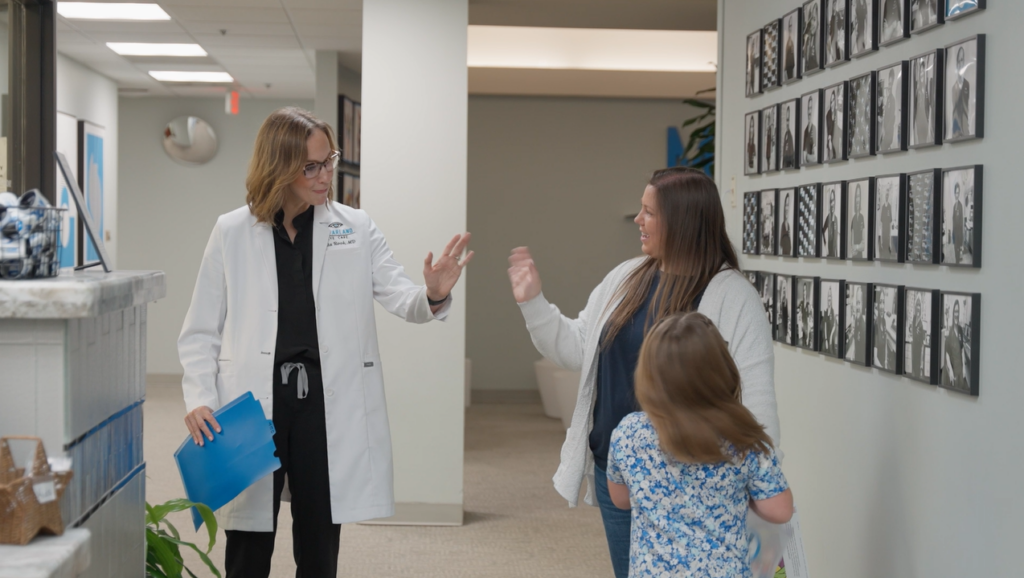
Children do not always realize they are seeing poorly because they assume everyone sees the world the same way they do. Sometimes vision problems show up as:
- Trouble reading
- Short attention span
- Squinting
- Frequent headaches
- Covering one eye
- Poor depth perception
- Falling behind in school
Early detection matters. The visual system develops rapidly during childhood, and untreated vision issues can affect learning and development.
What Do Eye Doctors Look for During Teen and Young Adult Eye Exams?
Teenagers and young adults often experience a shift from developmental concerns to lifestyle-related vision problems.
This stage of life usually focuses on:
- Updating glasses or contact lens prescriptions
- Managing digital eye strain
- Reducing headaches from screen use
- Monitoring dry eye symptoms
- Protecting long-term ocular health
Between phones, tablets, laptops, gaming, and studying, many younger patients spend most of their day focusing up close. That can lead to symptoms like:
- Eye fatigue
- Blurry vision
- Headaches
- Dry eyes
- Difficulty focusing
- Light sensitivity
An eye exam during your teens, 20s, and 30s helps ensure you are seeing clearly and comfortably while also establishing a baseline for future eye health.
Why Are Eye Exams So Important in Your 40s and 50s?
This is usually when patients start noticing age-related vision changes.
One of the most common changes is presbyopia, which is the natural loss of near focusing ability. Suddenly menus feel farther away, text messages get blurry, and arms become “too short.”
During this stage, eye doctors also begin paying closer attention to early signs of:
- Cataracts
- Glaucoma
- Macular degeneration
- Dry eye disease
- Diabetes-related eye changes
- High blood pressure-related eye findings
Many eye diseases develop slowly and painlessly, which is why regular exams become increasingly important as you age.
What Eye Conditions Become More Common in Your 60s and Beyond?
As we get older, the risk of age-related eye disease increases significantly.
During eye exams for patients in their 60s and beyond, doctors are carefully evaluating for conditions such as:

Cataracts
Cataracts happen when the natural lens of the eye becomes cloudy over time. Symptoms can include:
- Blurry vision
- Glare while driving at night
- Difficulty reading
- Faded colors
- Frequent prescription changes
Glaucoma
Glaucoma is often called the “silent thief of sight” because many patients do not notice symptoms early on. It damages the optic nerve and can lead to permanent vision loss if untreated.
Macular Degeneration
Macular degeneration affects central vision and becomes more common with age. Early detection is critical for protecting vision and slowing progression.
Diabetic Eye Disease
Patients with diabetes are at increased risk for retinal damage, swelling, bleeding, and vision loss. Routine dilated eye exams play a major role in early detection.
Do You Need an Eye Exam Even If You See Fine?
Yes.
Many serious eye conditions begin without symptoms. Patients are often surprised to learn they have early glaucoma, retinal problems, or signs of systemic health conditions during a routine eye exam.
Eye exams can sometimes reveal signs of:
- Diabetes
- High blood pressure
- Autoimmune disease
- Neurological conditions
- High cholesterol
Seeing clearly does not always mean your eyes are healthy.
Should You Have Your Eyes Dilated Every Year?
For many patients, yes.
Dilation allows your eye doctor to fully evaluate the retina, optic nerve, blood vessels, and overall internal eye health.
If dilation is not performed, retinal imaging or screening retinal photography may still provide valuable information about the health of the back of the eye.
At McFarland Eye Care, we believe preventative eye care matters at every age because protecting your vision is a lifelong investment.
Schedule Your Annual Eye Exam
Whether you are bringing in your child for their first eye exam, struggling with screen fatigue in your 20s, or monitoring cataracts later in life, your eye exam should be personalized to your stage of life.
Your eyes change over time. Your care should evolve with them.
At McFarland Eye Care, we are proud to provide comprehensive eye care for patients of all ages with a focus on long-term vision and dazzling patient care.