

Your alarm goes off. Before your feet touch the floor—or your brain fully understands what day it is—you reach for your phone.
And somewhere behind those barely open eyelids, your eyes are already preparing for another day of questionable decisions.
If your eyes could speak, here is what they might say about your morning routine.
6:02 A.M.: “We Just Opened. Why Is There a Screen in Our Face?”

Good morning to everyone except the bright phone screen positioned six inches from us.
Checking your notifications before getting out of bed may feel harmless, but your eyes have barely adjusted to the morning light. Suddenly introducing a bright screen can feel uncomfortable, especially if you already experience light sensitivity, headaches or dry eye.
The screen itself is not permanently damaging your eyes, but staring at it for long periods can contribute to digital eye strain. When you concentrate on a phone, tablet or computer, you may blink less frequently. Fewer complete blinks mean fewer opportunities to spread a healthy layer of tears across the surface of your eyes.
That can lead to:
- Dryness
- Burning or irritation
- Blurry vision
- Tired eyes
- Headaches
- Difficulty refocusing
What your eyes would prefer: Give them a minute to adjust to the room before beginning the morning scroll. Increase the distance between your face and your phone, reduce unnecessary glare and remember to blink.
Yes, blinking. The thing your body usually handles automatically until social media gets involved.
6:20 A.M.: “Please Take the Contacts Out Before the Shower”
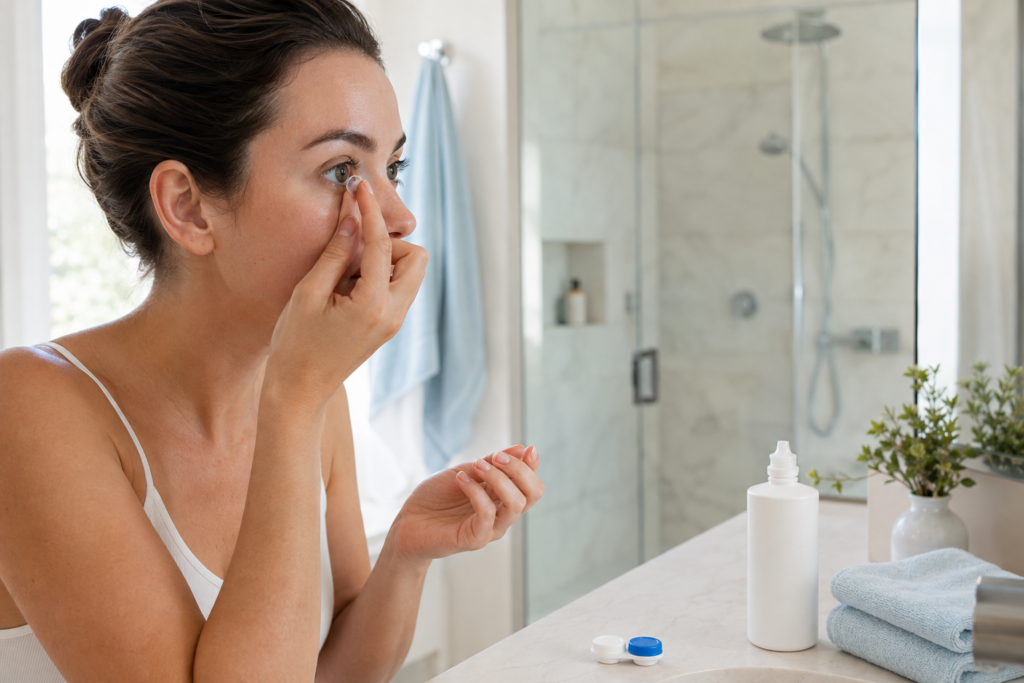
If you slept in your contacts and then carried them directly into the shower, your eyes would like to schedule an intervention.
Unless your eye doctor has specifically prescribed lenses for overnight wear, contacts should be removed before sleeping. Sleeping in contacts can reduce the amount of oxygen reaching the cornea and increase the risk of irritation and infection.
Contacts and shower water are also a terrible match.
Tap water is safe for many everyday uses, but it is not sterile. It may contain microorganisms that should not become trapped between a contact lens and the surface of your eye. Water can also cause soft lenses to change shape, swell and stick to the eye, potentially scratching the cornea and making it easier for germs to cause an infection.
This warning applies to showers, pools, lakes and hot tubs. Your contacts do not need a spa day.
What your eyes would prefer: Remove your lenses before sleeping, showering or swimming. Wash and thoroughly dry your hands before handling them, and use contact lens solution—not water—to clean or store them.
6:42 A.M.: “Could We Talk About That Eyeliner?”
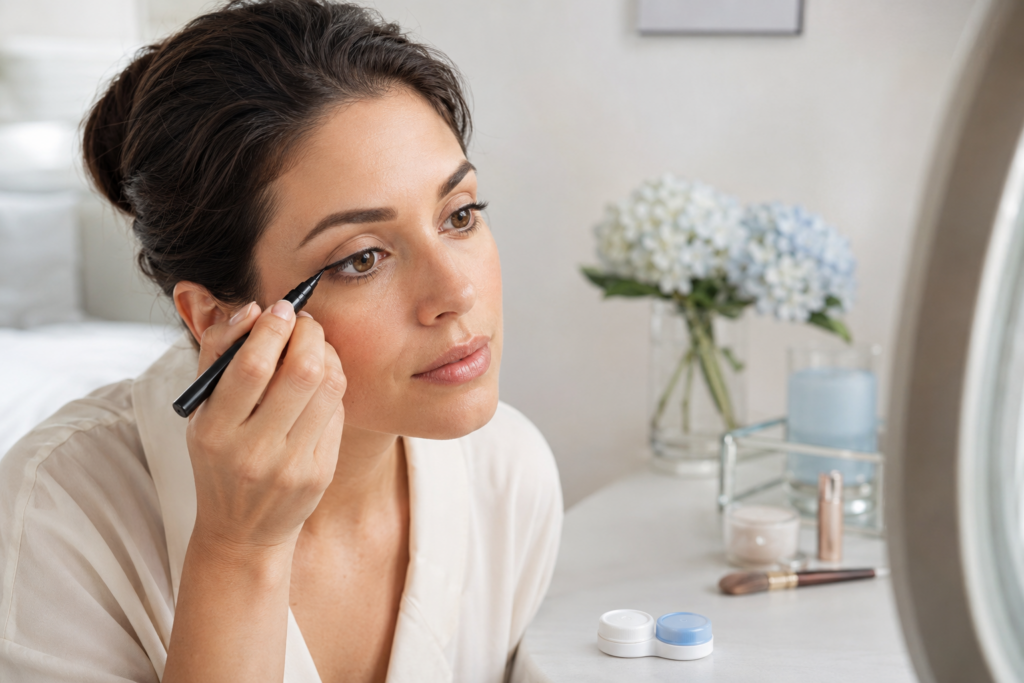
Eyeliner can create a beautiful look, but where you apply it matters.
Tightlining, or applying eyeliner directly along the inner edge of the eyelid, places the product close to the openings of the meibomian glands. These tiny glands produce oils that help keep your tears from evaporating too quickly.
Makeup, oils and debris can build up near the lash line and interfere with normal gland function. For someone already dealing with dry, irritated or sensitive eyes, repeatedly applying products in this area may make symptoms worse.
Old or contaminated eye makeup can create another problem. Each time an applicator touches your lashes and returns to its container, bacteria can travel with it. Sharing eye makeup adds even more opportunity for germs to spread.
And no, adding water or saliva to revive dried mascara is not a beauty hack. It is an invitation for contamination.
What your eyes would prefer:
- Apply eyeliner outside the lash line rather than directly on the inner rim.
- Replace eye makeup regularly.
- Never share mascara, eyeliner or applicators.
- Stop using products that cause redness, burning, itching or swelling.
- Throw away makeup used during an eye infection.
Your eyeliner should create drama. Your cornea should not.
6:50 A.M.: “Contacts Before Makeup, Please”
The order of your routine can make a difference.
Putting your contacts in before applying makeup helps reduce the chance of trapping powder, mascara or other cosmetic particles underneath a lens. When removing everything at night, take your contacts out before removing your makeup.
Always wash and completely dry your hands before touching your lenses. Lotion, skincare products, fragrance and makeup residue can transfer from your fingers onto the lens and then directly onto your eye.
If makeup gets under a contact lens and causes discomfort, do not spend the day blinking aggressively and hoping for the best. Remove the lens. Depending on the type, either replace it with a fresh one or clean and disinfect it according to your eye doctor’s instructions.
What your eyes would prefer: Clean hands, dry fingers, contacts first and makeup second.
They are not being high-maintenance. They are asking for basic workplace safety.
7:05 A.M.: “Which Eye Drops Are Those?”
Your eyes are itchy, so you reach for whatever bottle happens to be nearby.
Not all eye drops do the same thing.
Some drops lubricate dry eyes. Others treat allergies, infections, inflammation or glaucoma. Certain redness-relieving drops temporarily shrink blood vessels, which can make the eyes appear whiter without addressing the actual cause of the irritation.
If you wear contacts, you should also confirm that a drop is approved for use with your specific lenses. Some medications should be placed in the eyes only after the contacts have been removed, followed by a waiting period before reinserting them.
Preservatives in certain drops may also irritate sensitive eyes when used frequently.
What your eyes would prefer: Read the label, follow the directions and ask your eye doctor which drops are appropriate for your symptoms. If you are using drops regularly without improvement, it may be time to identify the underlying cause instead of continuing to treat yourself.
Your eyes do not want mystery liquid. They want a treatment plan.
8:00 A.M.: “And Now We Begin Eight Hours of Staring”

You arrive at work, open your computer and begin the daily marathon.
Several hours later, your eyes feel dry, tired and strangely heavy. The words on the screen may briefly blur, and you find yourself squinting or rubbing your eyes.
Long periods of screen use can contribute to digital eye strain, particularly when screens are too close, positioned poorly or surrounded by glare. Screen use can also reduce how often you blink, allowing tears to evaporate more quickly.
Try the 20-20-20 rule: every 20 minutes, look at something approximately 20 feet away for at least 20 seconds. These short breaks allow your focusing system to relax.
Your workstation matters too. Position your monitor approximately an arm’s length away, keep it slightly below eye level and adjust the brightness so it is similar to the lighting around you. A screen that looks like a small sun in a dark room is not helping.
What your eyes would prefer: Take regular breaks, blink completely, reduce glare and make sure your prescription is current.
If discomfort continues despite better habits, do not assume screens are the only cause. Dry eye disease, uncorrected vision problems and other eye conditions can produce similar symptoms.
9:47 P.M.: “You’re Not Actually Going to Sleep in That Makeup, Right?”
We have reached the final scene of the day: you are exhausted, the bed is calling and removing your makeup suddenly feels like an unreasonable demand.
Your eyes strongly disagree.
Sleeping in eye makeup allows mascara, eyeliner, oils and debris to remain around the lashes and eyelids for hours. That buildup may contribute to irritation, inflammation and blocked oil glands. Makeup particles can also enter the eye while you sleep and scratch or irritate the surface.
If you wear contacts, falling asleep without removing them raises the stakes. Sleeping in lenses increases the risk of painful eye infections—even when the lenses are approved for extended wear.
Those extra few minutes are not worth waking up with a red, painful or light-sensitive eye.
What your eyes would prefer: Remove your contacts, gently clean your eyelids and wash away all eye makeup before bed. Use a clean applicator or cloth rather than scrubbing aggressively.
Consider it your eyes’ closing shift.
Your Eyes Are Not Asking for a Perfect Routine
Most people are not intentionally mistreating their eyes. They are moving quickly, juggling responsibilities and trying to make it through the day.
But small habits repeated every morning and night can add up.
A more eye-friendly routine does not require a complete lifestyle overhaul. Start with a few simple changes:
- Wait a few minutes before beginning your morning scroll.
- Remove contacts before showering, swimming or sleeping.
- Wash and dry your hands before handling lenses.
- Keep eyeliner outside the inner lash line.
- Use eye drops only as directed.
- Take regular breaks from screens.
- Remove contacts and makeup before bed.
- Schedule routine comprehensive eye examinations.
When Your Eyes Stop Joking
Dryness and mild fatigue are common, but some symptoms should never be dismissed as the result of a busy day.
Contact an eye doctor promptly if you experience ongoing redness, pain, discharge, light sensitivity, worsening blurry vision or contact lens discomfort.
Seek urgent medical attention for sudden vision loss, a dark curtain or shadow across your vision, a sudden increase in floaters, new flashes of light, severe eye pain or symptoms following an eye injury.
Your eyes may put up with a lot during your morning routine, but they should never have to compete for your attention when something is genuinely wrong.
At McFarland Eye Care, we are here to help you understand what your eyes need—from managing dry eye and finding the right contact lenses to protecting your vision for the years ahead.
Is your daily routine leaving your eyes dry, irritated or exhausted? Schedule an eye examination with McFarland Eye Care today.
This article is intended for educational purposes only and is not a substitute for individualized medical advice, diagnosis or treatment.